Mining History
Article
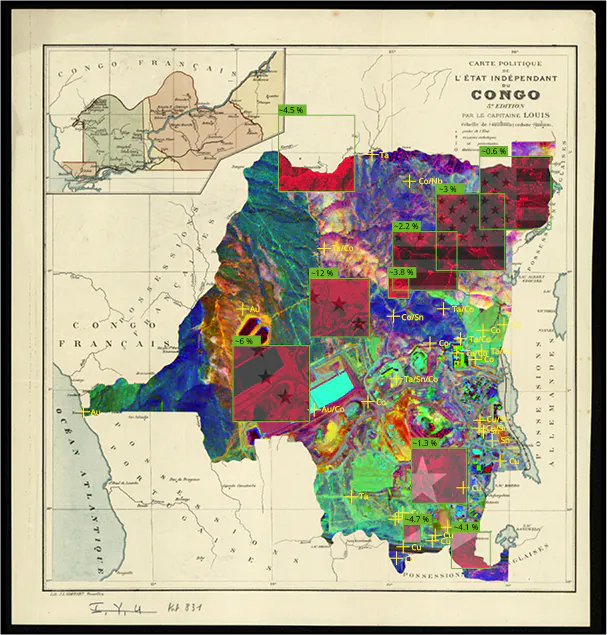
The increasing pressure on the Africa Museum to return Congolese artefacts has taken a new turn. The US, Congo and the EU are all keen to digitise the museum's geological archives from the colonial era — and gain access to information about the subsoil of Central Africa and its potentially untapped mineral resources.
Following a faltering peace deal between the DRC and Rwanda, the American mining company KoBold Metals signed an agreement with the Congolese government to digitise geoscientific archives. However, the Africa Museum refused to cooperate, stating that it cannot enter into an agreement with a private company that has a direct commercial interest in the material.
The museum's geological archives contain more than 264,000 aerial photographs, 25,000 maps, 160,000 rock samples and millions of documents mapping the mineral resources of the DRC. Much of this data was collected during the colonial period, when European geologists frequently relied on forced and unacknowledged indigenous knowledge and labour. The rising demand for critical minerals — lithium, cobalt and copper — has revived commercial interest in these records.
The situation raises fundamental questions about ownership and access. Critics, including Jean-Claude Mputu of Resource Matters, question why this data remains outside the hands of the Congolese state more than sixty years after independence. Researchers are calling for digital repatriation and public accessibility of the archives. The Africa Museum is pursuing its own digitisation work alongside African partners under the EU's PanAfGeo+ programme — but the question of whose interests this will ultimately serve remains unanswered.
Read the Articles here:
French
Flemish